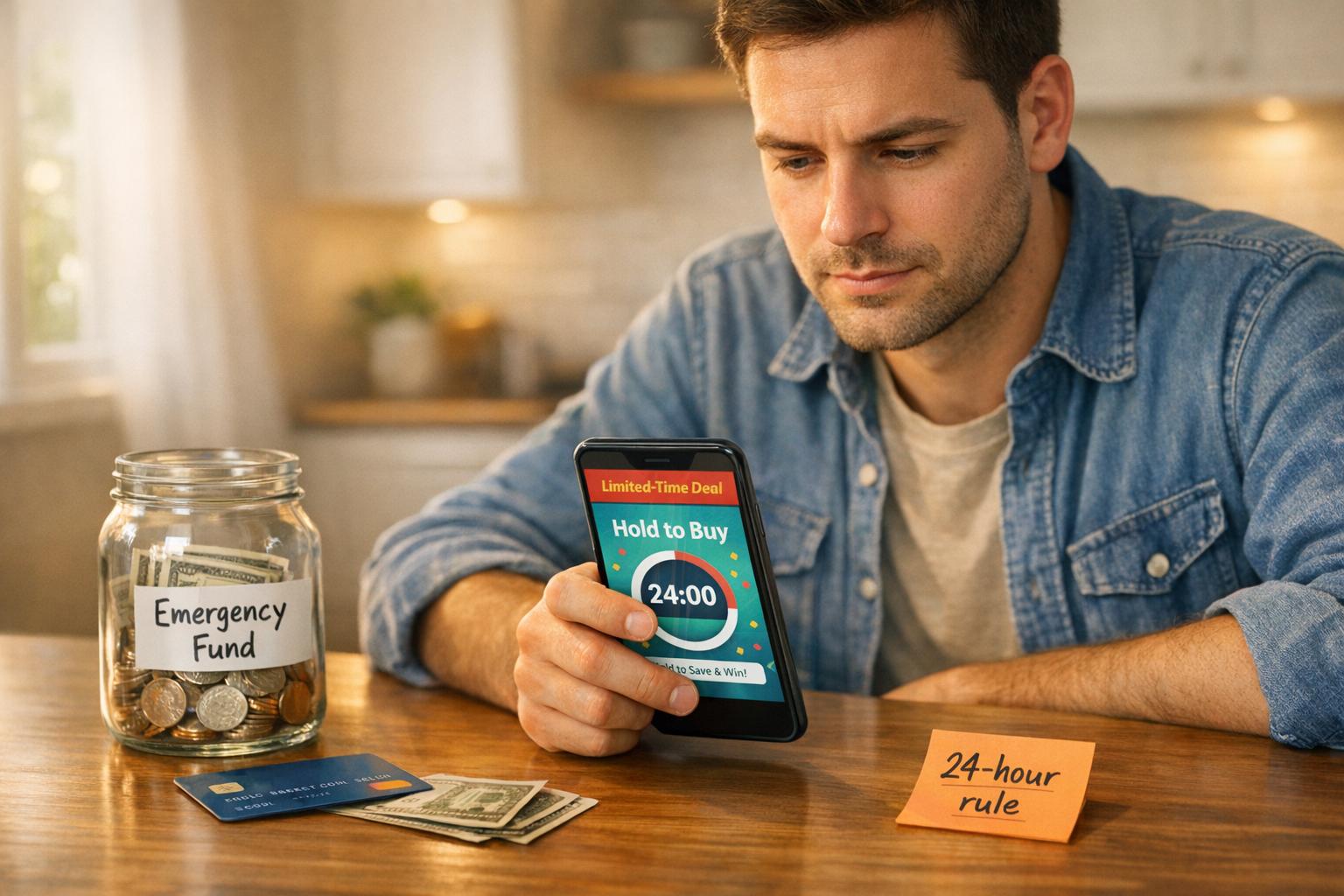
How Reward-Seeking Impacts ADHD Financial Decisions
ADHD often leads to impulsive spending due to how the brain processes rewards. Lower dopamine levels create a constant craving for stimulation, making immediate gratification from purchases more appealing than long-term financial goals. This can result in overspending, debt, and challenges saving for the future.
Key points:
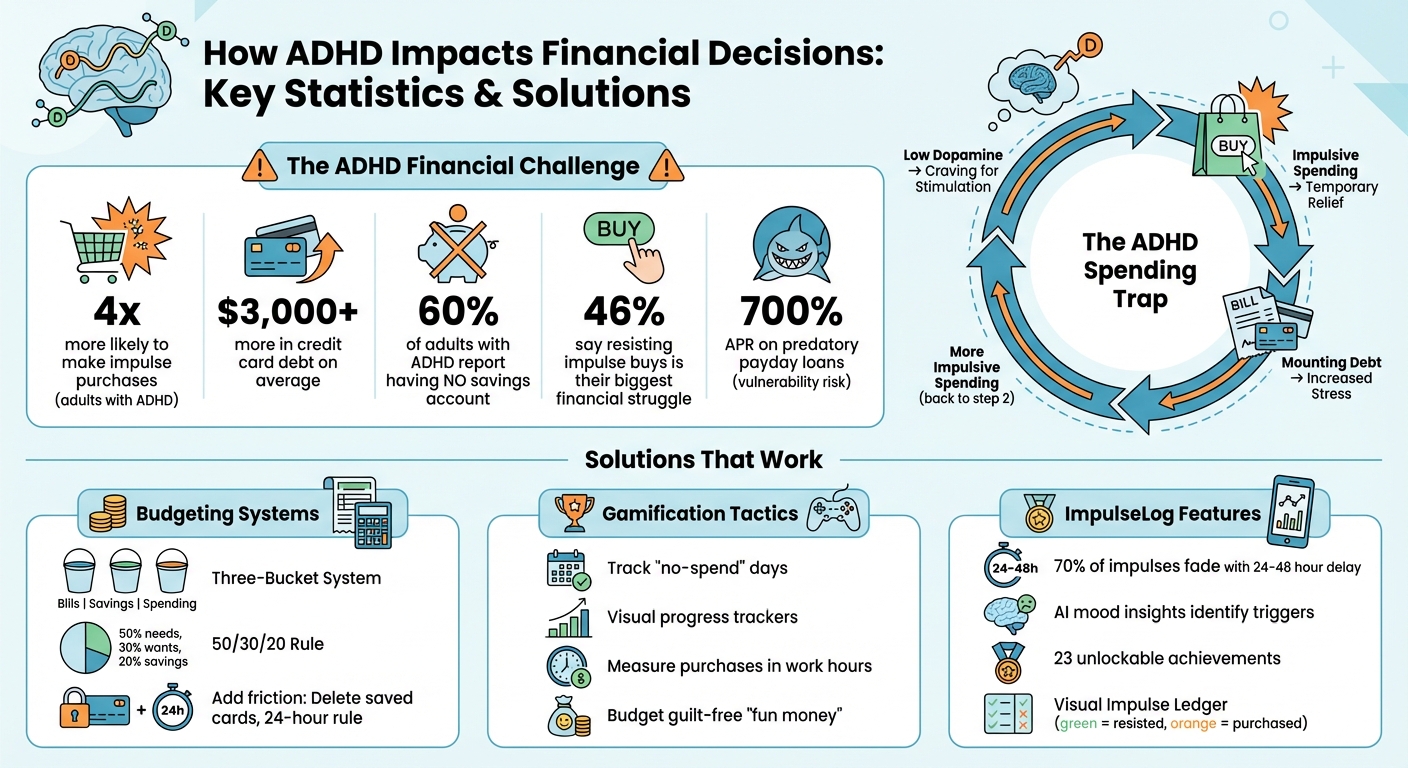
- Adults with ADHD are 4x more likely to make impulse purchases and carry $3,000+ more in credit card debt.
- Impulsive spending stems from low dopamine levels and difficulty delaying gratification.
- Emotional spending, decision fatigue, and late-night shopping worsen financial struggles.
- Strategies like the "Three-Bucket System", 24-hour purchase delays, and ADHD spending tricks like ImpulseLog can help manage spending.
Understanding these patterns and using tailored tools can help turn impulsive tendencies into better financial habits.
ADHD Financial Impact Statistics and Management Strategies
MANAGING MONEY WITH ADHD PART 3 | the BEST way to budget (and STOP impulse spending) with ADHD
sbb-itb-1fa9254
How Reward-Seeking Affects Your Finances
The constant craving for rewards, driven by your brain's dopamine system, can have a direct impact on your financial health. This pursuit of instant gratification doesn't just influence your emotions - it can also lead to financial struggles. Let’s explore how these behaviors create financial traps and what can be done to address them.
The Overspending and Debt Trap
When your brain seeks quick stimulation, shopping often becomes a go-to solution. While it might provide a fleeting sense of relief, it can also set off a damaging cycle. Increased spending leads to mounting debt, which in turn creates stress, often triggering even more impulsive spending. ADHD coach Caren Magill describes this pattern as the "ADHD Tax" - the financial costs that result from executive function challenges. These can include late fees, parking fines, or paying high interest rates on credit cards [2].
This cycle doesn’t just drain your wallet - it also makes saving for future needs feel impossible. The immediate stress of debt overshadows long-term financial goals, leaving you stuck in a loop of financial instability.
Why Long-Term Savings Get Ignored
Saving for the future feels less rewarding compared to the instant gratification of a purchase. A retirement account doesn’t offer the same immediate payoff as hitting "Add to Cart." This tendency to discount future rewards explains why over 60% of adults with ADHD report having no savings account at all [2].
Dr. Russell Barkley points out that this isn’t due to a lack of understanding about the importance of saving. Instead, it’s a matter of performance - knowing what to do but struggling to act on it in the moment. The ADHD brain often separates today’s spending decisions from tomorrow’s consequences, making it harder to prioritize long-term goals.
Emotional Spending and Scam Risks
Spending decisions are often driven by emotions. Stress, boredom, or frustration can make the "Buy Now" button feel like an easy escape [2]. This emotional spending can lead to serious risks, especially when paired with financial vulnerabilities. For example, individuals with ADHD are more likely to fall victim to predatory lending practices, such as payday loans or pawn services, which can charge staggering annual percentage rates of up to 700% in some U.S. states [3].
Additionally, decision fatigue - common after a day of managing ADHD symptoms - can make late-night online shopping all the more tempting. This combination of emotional vulnerability and impulsivity creates a perfect storm for financial harm, leaving individuals exposed to scams or unnecessary expenses.
How to Turn Reward-Seeking into Better Money Habits
If you’re looking to turn impulsive spending into smarter money habits, the trick lies in working with your ADHD brain rather than fighting against it. By channeling your brain's natural tendencies, you can create strategies that feel rewarding and sustainable.
Budgeting Methods That Fit Your ADHD Brain
Traditional budgeting systems often fall short for people with ADHD. Instead, try the Three-Bucket System: split your money into three accounts - a Bills Account for automatic payments, a Savings Account (preferably at a separate bank to reduce temptation), and a Spending Account for everyday use [5][1].
Another option is the 50/30/20 Rule, which divides your income into needs (50%), wants (30%), and savings (20%). To curb impulsive spending, add some "friction" to your habits. For example, delete saved credit card details, uninstall shopping apps, or enforce a 24-hour waiting period before making purchases [4][5].
"Your ADHD brain excels at creative problem-solving but struggles with repetitive tasks. The solution? Make your money manage itself." – Harold Meyer, The ADD Resource Center [4]
Here’s another way to rethink spending: measure purchases in terms of work hours. Ask yourself, "Is this item worth five hours of my time?" This perspective can help you weigh the value of your money more thoughtfully [4][7].
Turning Financial Discipline into a Game
Why not make saving money a game? Set up challenges, like tracking "no-spend" days on a calendar or avoiding impulse buys for a week. Reward yourself with points or non-monetary treats when you hit your goals [8][9].
Visual tools can also help. Use a savings thermometer on your fridge or set a picture of your savings goal as your phone’s lock screen. Seeing your progress can give you that instant feedback your brain craves, reducing the urge to splurge [5][6]. To avoid feeling deprived, budget a specific amount of "fun money" each month - spend it guilt-free. And when you feel the itch to buy, add the item to a wishlist and wait 24 hours. Sometimes, just writing it down can provide enough of a dopamine boost to satisfy the urge [7].
How ImpulseLog Can Help You Stay on Track
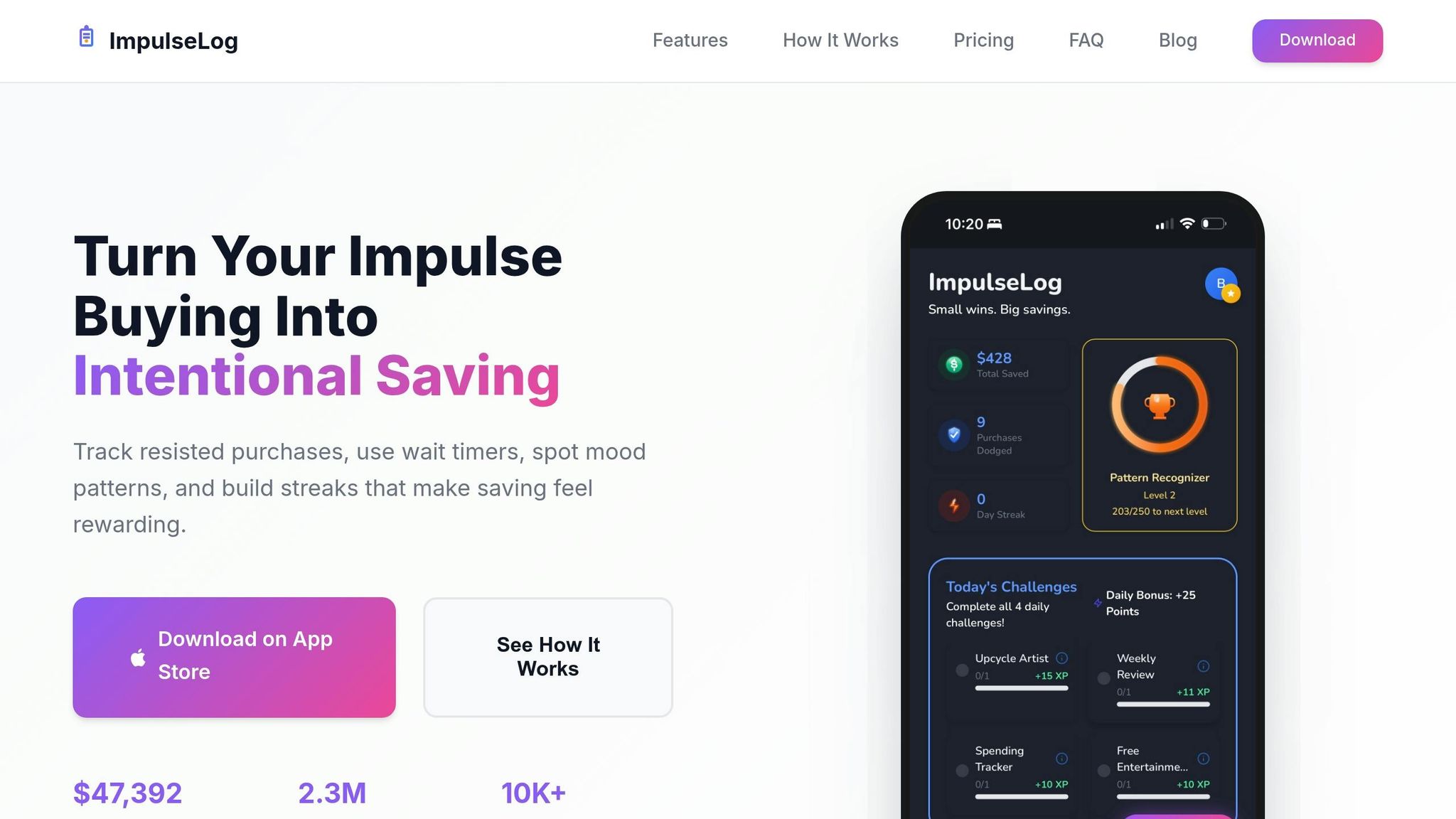
For those who thrive on gamified systems, tools like ImpulseLog are designed to support ADHD brains. ImpulseLog turns tracking your spending impulses into an engaging experience. Forget about relying on sheer willpower - the app lets you log impulses quickly, track achievements, and monitor your progress visually.
One standout feature is its AI-powered mood insights, which help you identify emotional triggers behind your spending. This transforms vague patterns into clear, actionable insights. With 23 unlockable achievements and streak tracking, every time you stick to your goals feels like leveling up.
Research backs this approach: 46% of adults with ADHD say resisting impulse buys is their biggest financial struggle [7]. By making money management feel rewarding rather than restrictive, ImpulseLog aligns with the way your brain works to help you achieve your financial goals.
ImpulseLog Features for Managing ADHD Spending
ImpulseLog provides specialized tools to help manage spending habits influenced by ADHD, turning impulsive tendencies into measurable progress.
Track Impulses and Measure Your Progress
ImpulseLog tackles impulsive spending by focusing on the moments of temptation instead of just tracking past purchases. When you feel the urge to buy something, the app lets you log that impulse in a matter of seconds. This simple action gives your brain a small dopamine reward - without spending any money.
The app’s Impulse Ledger visually tracks your progress. Resisted impulses are marked in green, while purchases appear in orange. This "Spending vs. Resistance" view makes it easy to see how much money you’ve saved by holding back on impulsive buys.
For added support, you can set a 24- or 48-hour delay on purchases. Research shows that about 70% of ADHD-related impulses fade during this waiting period [10].
AI Mood Insights and Spending Predictions
ImpulseLog’s Premium plan takes things a step further with AI-powered insights. Using gpt-5-mini technology, the app analyzes your mood and spending patterns to identify triggers like "late-night scrolling" or "stress after meetings." By logging both your impulses and emotional states, the AI provides tailored recommendations to help you stay on track.
The goal isn’t to make you feel bad about your impulses but to turn them into useful data. As the Whistl Team explains:
"Your impulses are data, not defects" [11].
For example, if the app notices you’re most likely to shop impulsively between 10:00 PM and midnight, it might suggest uninstalling shopping apps during those hours. These personalized insights are designed to fit your needs, with flexible plan options available.
ImpulseLog Plans: Free, Essential, and Premium
| Plan | Price | Key Features |
|---|---|---|
| Free | $0 forever | Core logging, Impulse Ledger, goals, streaks, daily rituals, basic insights, and offline logging |
| Essential | $4.99/month | Everything in Free, plus advanced analytics, unlimited streaks, 23 achievements, and priority support |
| Premium | $8.99/month | Everything in Essential, plus AI mood insights, weekly summaries, pattern detection, mood correlations, predictive analytics, and data export |
The Free plan includes all the basics to help you start tracking impulses and building streaks. If you’re motivated by gamification, the Essential plan adds advanced analytics and unlocks all 23 achievements. For those looking to connect emotional patterns to financial habits, the Premium plan offers AI-driven insights that turn vague feelings into actionable strategies. Whether you’re just starting out or need deeper support, there’s a plan to suit your goals.
Conclusion: Take Control of ADHD Reward-Seeking
ADHD-related financial challenges often stem from a dopamine-driven cycle, where simply knowing better isn’t enough to counter impulsive decisions [2]. By understanding this, you can create systems that work in harmony with the way your brain functions.
Uncontrolled spending tied to ADHD can lead to serious financial consequences [1][2]. This highlights the importance of adopting strategies tailored to your brain’s unique needs. Financial stability isn’t just about money - it’s about regulating your nervous system. ADHD coach Caren Magill compares having money in the bank to a "slow-burning protein" that provides lasting calm, unlike the temporary "sugar rush" of impulsive purchases [2].
Simple strategies can make a big difference. Consider using techniques like the 24-hour rule to delay purchases, automating your savings to remove decision fatigue, or visual trackers to create a moment of pause. These small changes introduce the friction your brain needs to rethink impulsive choices.
Tools like ImpulseLog can help you channel those impulses into something productive. By logging temptations before they turn into purchases, you transform impulsive energy into actionable progress. Whether you start with the Free plan or choose the Premium option for AI mood insights, the goal is the same: reduce decision fatigue and make saving feel rewarding.
Replace guilt with understanding and practical systems that respect how your brain works. Start small - every impulse you resist is a step closer to financial stability.
FAQs
How can I tell if my spending is dopamine-seeking or actually necessary?
Spending motivated by dopamine-seeking tends to feel impulsive, often driven by the thrill of instant pleasure or excitement. This type of spending frequently happens during late-night hours when decision-making can be less rational. On the other hand, necessary spending is usually more deliberate, guided by practical needs or thoughtful planning. Before hitting "buy", take a moment to consider why you're making the purchase. If the main reason is immediate gratification, chances are it’s a dopamine-driven decision.
What’s the fastest way to stop late-night impulse buying?
To tackle late-night impulse buying, start by setting clear boundaries. For example, avoid online shopping before bed and log out of your shopping accounts to make impulsive purchases less convenient. Try using the 24-hour rule, where you wait a full day before making any non-essential purchases. Reducing screen time at night can also make a big difference.
Consider using tools like ImpulseLog, which tracks your buying impulses and uses gamification to help you build better habits over time. Additionally, creating consistent evening routines and practicing mindfulness can help you stay focused and resist the urge to spend impulsively during late hours.
How do I pick the right ImpulseLog plan for my needs?
Choosing the right ImpulseLog plan comes down to your goals and the kind of support you’re looking for. If you’re just getting started or mainly need quick impulse tracking and mood insights, a basic plan might be all you need. But if you’re after more advanced features - like detailed tracking, progress visuals, or daily challenges - a higher-tier plan could be a better option. Take a close look at your spending habits and what you want to achieve to pick the plan that helps you build smarter financial habits.