Emotional Spending Triggers: What Drives Impulse Buys?
Emotional spending happens when your feelings - like stress, boredom, or even celebration - drive you to shop, often leading to regret later. 63% of Americans admit emotions affect their purchases, and 74% of emotional shoppers overspend. For people with ADHD, impulse buying can be even harder to control due to dopamine-seeking behavior.
Key Takeaways:
- Emotional vs. Impulse Spending: Emotional spending is tied to feelings and often rationalized ("I deserve this"), while impulse spending is more spur-of-the-moment and unconscious.
- ADHD Challenges: Adults with ADHD are 4x more likely to impulse shop, often exceeding credit limits and carrying higher debt.
- Common Triggers: Stress, boredom, loneliness, celebration, and frustration are major drivers of emotional spending.
- Solutions: Pause before purchases, track emotional triggers, and replace shopping with low-cost, rewarding activities like puzzles or walks. Apps like ImpulseLog can help by gamifying savings and analyzing spending patterns.
Understanding what drives emotional spending can help you regain control over your finances and make more intentional choices.
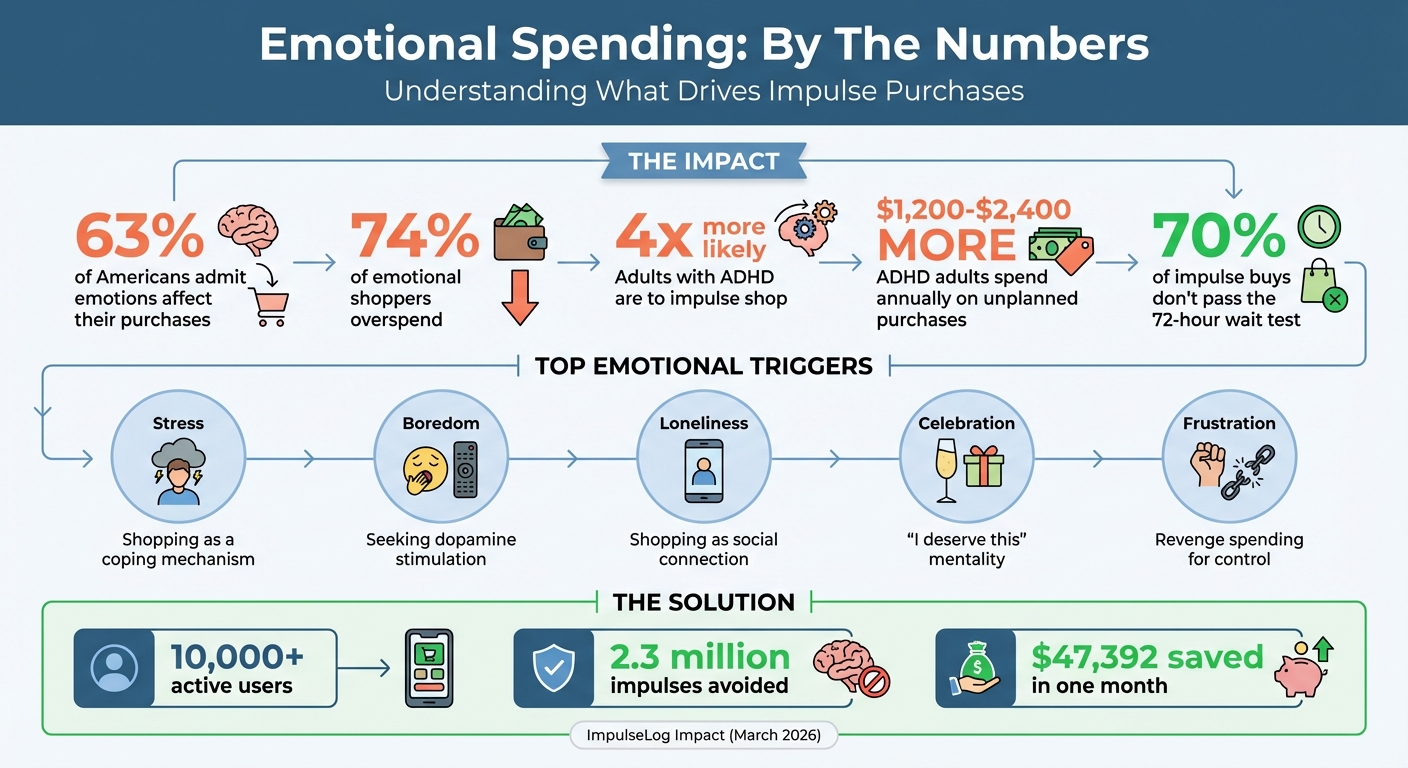
Emotional Spending Statistics and Triggers Infographic
ADHD and impulsive spending | MissUnderstood
sbb-itb-1fa9254
Common Emotional Triggers for Impulse Buys
Understanding how emotions influence spending decisions can help explain why impulse buying happens so often. Our feelings can distort judgment, leading to purchases we might later regret.
Stress: Shopping as a Coping Mechanism
When stress levels climb, shopping can feel like a reward for getting through tough times. It’s like your brain is saying, “I earned this” [2]. For people with ADHD, where managing emotions can already be a challenge, the urge for quick relief becomes even stronger. Shopping offers a temporary escape from anxiety and pressure [4] [5]. But the rush doesn’t last - dopamine levels drop quickly, often leaving behind a sense of buyer’s remorse.
"Impulsive spending has almost nothing to do with understanding math or money. Instead, it is a direct symptom of a brain that is starving for stimulation."
- Dr. Russell Barkley, Clinical Psychologist [1]
Stress isn’t the only emotional state that can lead to impulse buys. Other feelings, from boredom to loneliness, can have a similar effect.
Boredom and Loneliness: Filling the Void with Shopping
Boredom can be especially tough for individuals with ADHD. With naturally lower dopamine levels, there’s a constant craving for stimulation. Shopping apps become a quick and easy way to get that dopamine boost. Late-night browsing, driven by a need for novelty, often feels rewarding in the moment. Similarly, loneliness can make online shopping feel like a form of social connection [2] [4] [5]. But just like with stress, the excitement fades soon after the purchase arrives, leaving a sense of emptiness.
These triggers show how emotional states can lead to irrational spending choices, even when logic would suggest otherwise.
Celebration and Revenge Spending
Impulse buying isn’t always about negative emotions - positive feelings can play a role too. Celebrating a win, whether it’s a promotion, finishing a challenging project, or simply surviving a tough week, often leads to the thought, “I deserve this!” [2] [3]. For those with ADHD, emotional highs can amplify this urge, turning a small treat into an unplanned shopping spree.
Revenge spending, on the other hand, stems from feelings like frustration or being undervalued. Buying something becomes a way to reclaim control or assert independence [2]. Whether it’s celebration or revenge, these moments showcase how emotions can take the wheel before rational thinking even kicks in.
How to Manage Emotional Spending
Once you've identified the triggers behind your impulse purchases, the next step is figuring out how to disrupt those impulses. Managing emotional spending isn't about sheer willpower - it’s about creating systems that work with your natural tendencies instead of fighting against them. The trick lies in building habits that stop the cycle before it starts.
Pause and Ask Questions Before Buying
The idea here is to slow down the process between feeling the urge and taking action. Since self-control tends to wear down over time [4][9], relying on it alone won’t cut it. Instead, introduce some friction into your buying habits. For instance, delete saved credit card details from online accounts, turn off one-click purchasing, and remove shopping apps from your phone [4][7].
When you feel the pull to buy something, pause and ask yourself questions like, “Do I actually need this, or is it just a want?” or “What will this cost me in terms of time and effort?” [1][7][9]. For anything over $25, try implementing a 72-hour waiting rule - this simple delay can help you rethink the purchase. Research shows that about 70% of impulse buys by adults with ADHD don’t pass this "wait test" [8]. Another idea? Stick a physical "PAUSE" label on your credit card to disrupt the habit of automatically swiping [1].
For bigger purchases, consider having a "text before you buy" buddy. This is someone you can reach out to for a quick reality check when your inner pause button isn’t working [5][9]. Once you’ve hit that pause, take a moment to jot down your emotional state and details about the purchase you were considering. This helps you uncover patterns over time.
Track Your Emotional Triggers and Spending Patterns
Tracking your spending and emotional triggers with an impulse spending calculator can help you break the cycle of impulse buying. Instead of seeing your impulses as failures, think of them as data points. This approach can reduce the shame that often fuels even more spending [4][8]. On average, adults with ADHD spend $1,200 to $2,400 more each year on unplanned purchases, late fees, and forgotten subscriptions compared to neurotypical adults [8].
Instead of making a purchase, write it down - include the item, its cost, and your mood at the time [4][8]. This small action can give you a dopamine boost without the financial hit [8]. Tools like ImpulseLog make tracking easier by gamifying the process. The app uses AI to analyze your mood and spending patterns, helping you connect emotions to buying habits. Seeing your behaviors laid out as data can make it easier to identify what triggers your spending.
Replace Emotional Spending with Healthier Activities
One effective way to manage emotional spending is to create a "Dopamine Menu" - a list of free or low-cost activities you can turn to when the urge strikes. For example, if you’re bored, you could play a video game you already own, reorganize a room, or work on a puzzle [4][5]. If you’re feeling stressed, try going for a walk with music or practicing breathing exercises [4][5]. And if loneliness is the issue, call a friend or connect with an online group [4][11].
Gamification can be particularly helpful for ADHD brains. Apps like ImpulseLog turn resisting purchases into a game where you earn points, unlock achievements like “Impulse Master,” and level up [6]. Visual tools like savings thermometers or progress bars can also make your financial goals feel more tangible and rewarding [8][10]. The goal is to find activities that satisfy the underlying need behind the urge - whether it’s seeking stimulation, easing stress, or finding connection [5][11].
How ImpulseLog Helps You Control Emotional Spending
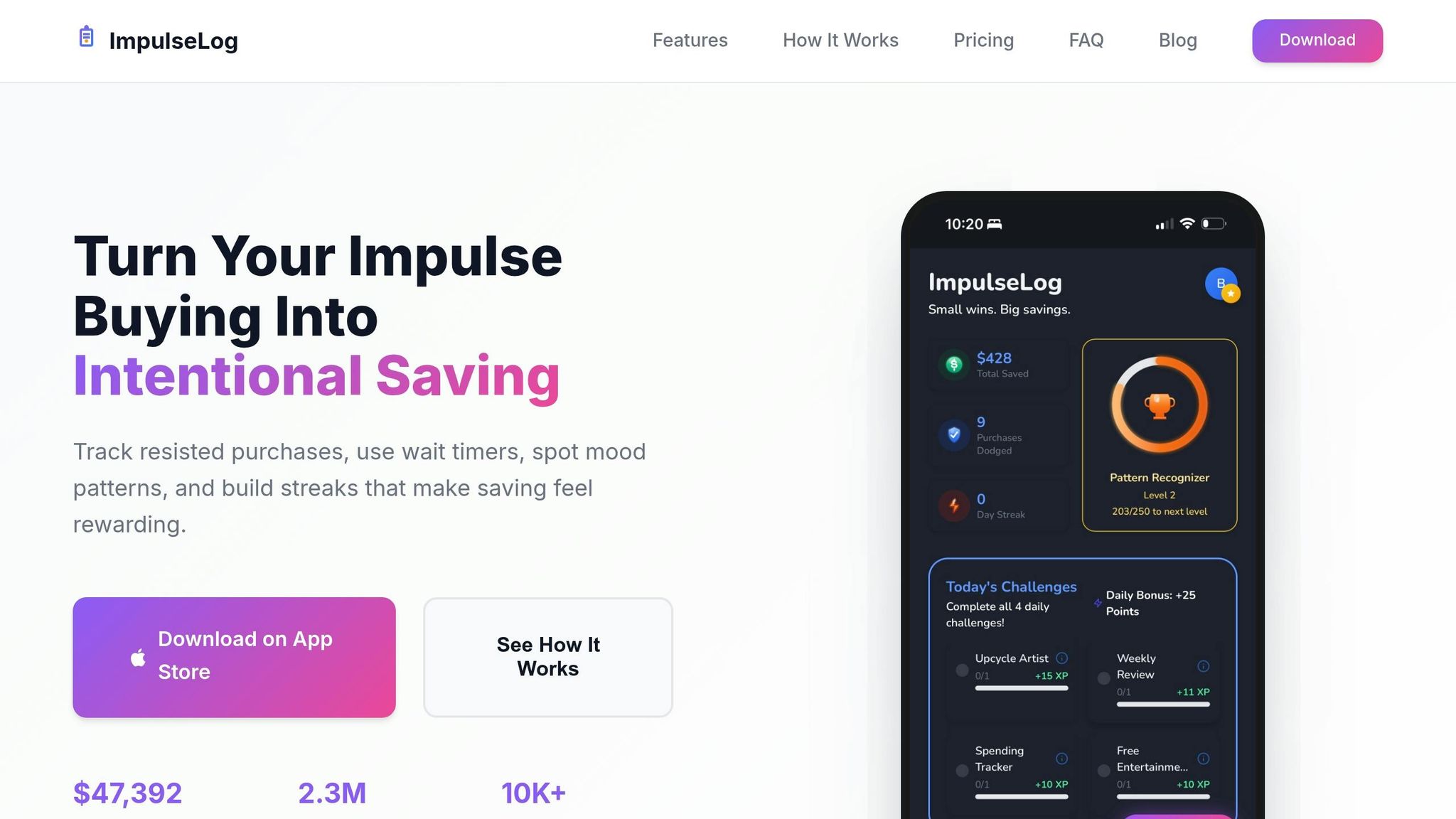
Understanding your triggers is just the first step; managing them takes it to the next level. ImpulseLog is designed as a practical tool for impulse control, tailored for people with ADHD and other neurodivergent individuals. By March 2026, the app had over 10,000 active users who collectively avoided 2.3 million impulses and saved $47,392 in a single month [6]. Unlike traditional methods that rely on willpower or complicated budgeting tools, ImpulseLog makes skipping a purchase feel rewarding. Here's how its features help you break the cycle of impulsive spending.
Quick Purchase Logging and AI Mood Analysis
ImpulseLog makes it incredibly easy to log an avoided purchase - just five seconds is all it takes. You can also record your mood at the moment, giving the app’s Premium insights-powered analysis the data it needs to uncover emotional patterns tied to your spending habits. The results are displayed in colorful, dopamine-boosting charts that are easy to digest and engaging to review [6].
Gamification and Visual Progress Tracking
ImpulseLog transforms the act of saving into a game. Every time you resist an impulse, you earn XP points and unlock achievements like "First Save" or "Impulse Master." These rewards replace the instant gratification of spending with the satisfaction of progress. The app also features real-time visual trackers for your savings goals, making abstract financial milestones feel concrete and easier to grasp - especially for ADHD users who thrive on visual feedback [6].
Daily Challenges and Predictive Analytics
To keep things interesting, ImpulseLog offers daily challenges that encourage consistent engagement. For those who subscribe to the premium AI suite ($29.99/year), the app takes things further with predictive insights. By analyzing your mood and spending patterns, it identifies when you're most vulnerable - like Friday evenings after a tough week - and suggests alternative activities to sidestep temptation. This feature helps address what Dr. Russell Barkley describes as the ADHD "performance deficit" - knowing what to do but struggling to act in the moment [1][6].
Conclusion
Emotional spending isn’t about a lack of discipline. As My Financially Flexible Life explains:
"Emotional spending is not a lack of discipline. It is a human response to emotional activation" [2].
The first step in breaking the cycle is identifying what triggers your spending. For neurodivergent individuals, particularly those with ADHD, these triggers can feel even more intense. That’s because their nervous system often seeks novelty and the dopamine rush that comes with it.
You don’t need flawless self-control to shift your habits. Simple strategies like the 72-hour waiting rule or tracking emotional patterns can help create a pause between feeling the urge and acting on it. Once you understand the "why" behind your spending, you can make choices with intention instead of reacting impulsively.
Tools like ImpulseLog can make this process more manageable. By logging impulses, analyzing emotional patterns with AI, and even offering rewards for progress, apps like this turn the challenge of impulse control into something more engaging and achievable.
Financial freedom isn’t an overnight transformation - it begins when you take control of the emotions driving your purchases. Small, consistent steps - like removing saved payment info, setting a budget for "fun" purchases, or using a gamified tracker - can lead to healthier spending habits and meaningful savings over time. The key is finding what fits your unique needs, especially if your brain is wired for different strategies.
FAQs
How do I tell emotional spending from normal “treat yourself” spending?
Emotional spending is often driven by feelings such as stress, boredom, or even grief. It tends to be impulsive, unplanned, and serves as a quick fix for emotional relief. On the other hand, “treat yourself” spending is more deliberate. It's about making thoughtful, moderate purchases that align with your long-term goals and values.
To tell them apart, take a moment to reflect on your emotions and the reasoning behind your spending. Was it a conscious choice, or was it a reaction to emotional distress? If you notice a consistent pattern of impulsive buying tied to your feelings, it’s likely emotional spending.
What can I do in the moment when an impulse-buy urge hits?
When you feel the urge to make an impulse buy, take a moment to pause and acknowledge it - no need for self-criticism. Try making the purchase process less convenient by deleting saved payment information or putting your credit cards out of reach. Then, ask yourself: Why do I want this? Does it support my long-term goals? If you can, wait 24 hours before deciding. This delay can help you step back, think clearly, and lessen the emotional draw of the purchase.
How can ImpulseLog help me spot my spending triggers faster?
ImpulseLog is designed to help you pinpoint what drives your impulse purchases by tracking them and analyzing the emotions behind them. With tools like quick logging for spur-of-the-moment buys and AI-driven mood insights, it highlights how feelings like stress or boredom might influence your spending. Features like visual progress tracking and daily challenges keep you engaged, making it easier to spot patterns and take control of your spending habits.